Removing a tick from your dog isn’t just about getting rid of an annoying hitchhiker: it’s about protecting your pet from serious diseases like Lyme disease or anaplasmosis. Ticks can latch on anywhere, from your dog’s paws to their ears, and if left unchecked, they can spread harmful bacteria. Knowing how to safely and effectively remove a tick is a skill every dog owner should have.
I still remember the first time I found a tick on my own dog. My hands were shaking, but once I had the right technique, it became much easier. That moment taught me how important it is to stay calm and prepared.
Key Things to Understand
- Timing matters: Ticks should be removed as soon as possible to lower disease transmission risk
- Right tools: Use fine-tipped tweezers or a tick removal tool for the best grip
- Avoid myths: Never squeeze the tick’s body or use methods like burning or smothering
- Post-removal check: Check the bite area afterward for any remaining parts of the tick
- Save the tick: Save the tick in a sealed container in case your vet needs to identify it later
What to Look For
When you’re examining your dog, pay close attention to areas where ticks love to hide: between the toes, around the ears, under the collar, and along the tail. Ticks can be as small as a pinhead or as large as a grape when engorged with blood, so look for any unusual bumps or dark spots on the skin. If you feel a small, firm lump while petting your dog, it’s worth taking a closer look with a flashlight. After removal, watch the bite site for redness, swelling, or signs of infection over the next few days. If you notice any of these, it’s a good idea to call your vet.
I once skipped checking my dog after a tick removal because I thought it was fine. A few days later, I noticed a red rash and took her to the vet, who confirmed it was a mild infection. It was a good reminder that even small issues can escalate if ignored.
How to Remove a Tick Safely
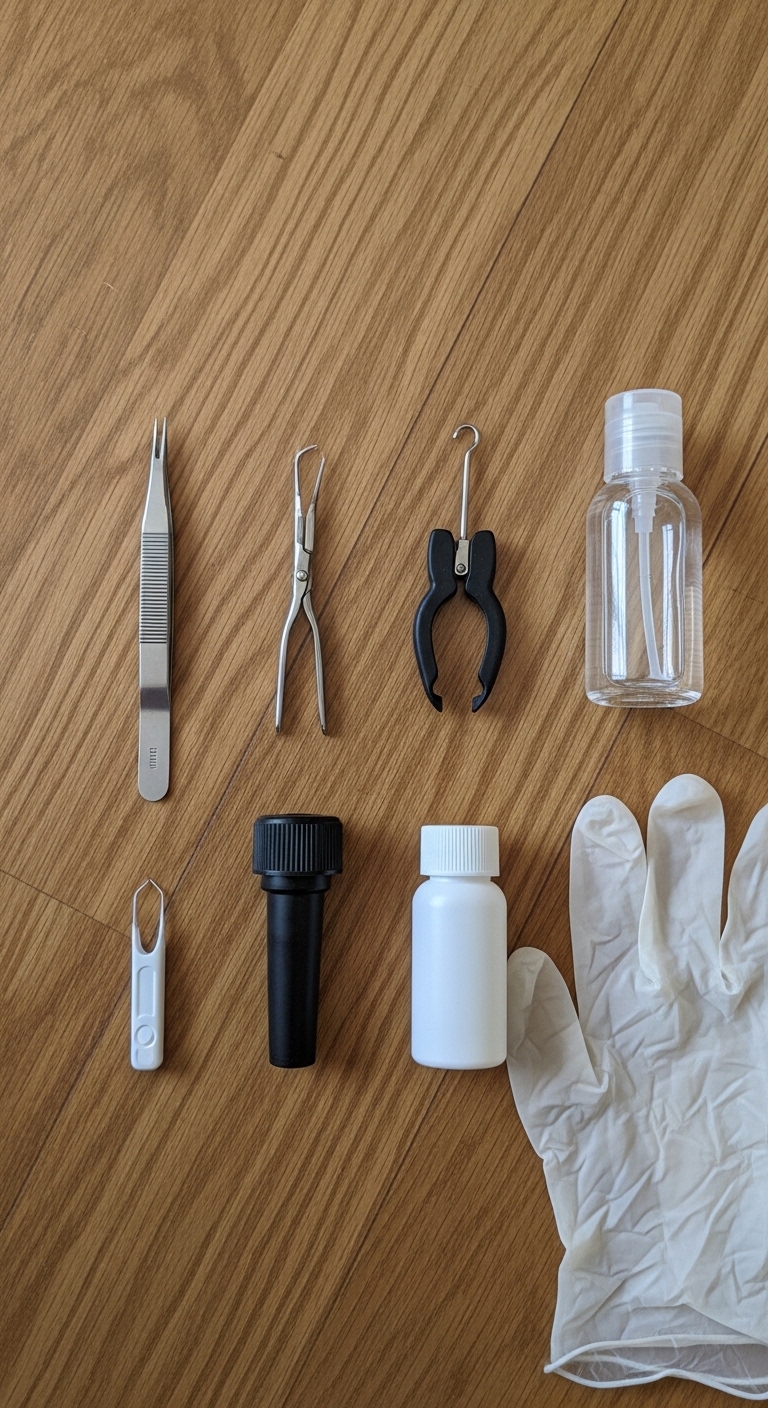
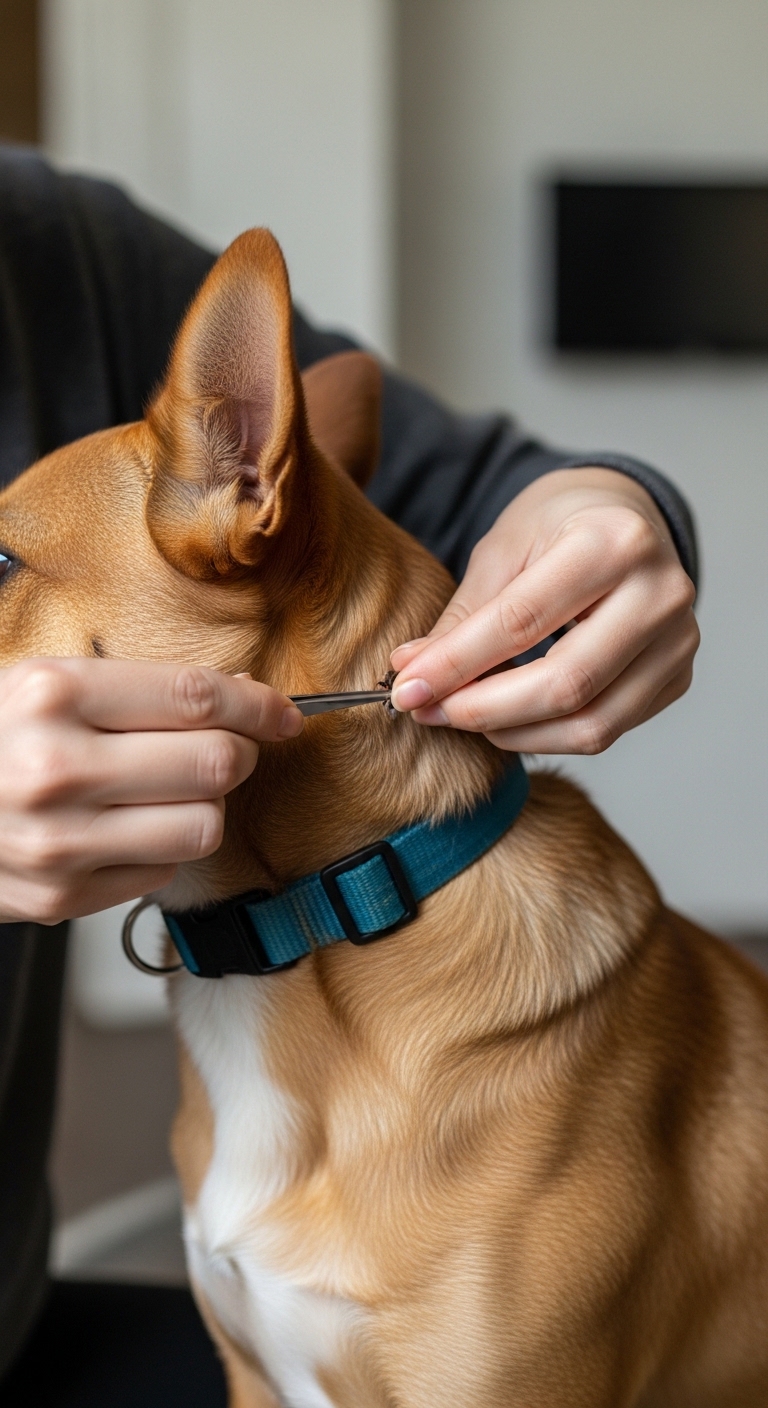
Start by gathering your supplies: a pair of fine-tipped tweezers, rubbing alcohol, and a small container with a lid. If you have a tick removal tool, that works even better. Calm your dog first, either by sitting with them or having someone help keep them still. Part your dog’s fur to expose the tick, then grasp it as close to the skin as possible. Pull upward with steady, even pressure: don’t twist or jerk, as this can cause the mouthparts to break off. Once the tick is out, clean the bite area with rubbing alcohol and save the tick in the container in case you need to show it to your vet. If you’re unsure about doing it yourself, your vet can remove it for you.
What to Do After Removal
Even after successful removal, the job isn’t quite done. Monitor the bite site for the next few days for any signs of infection, like redness, swelling, or discharge. If the area looks worse after 24 hours, it’s worth a call to your vet. Keep an eye on your dog’s behavior too: lethargy, loss of appetite, or lameness could signal a tick-borne illness. If you live in an area with high tick activity, consider talking to your vet about preventive treatments like tick collars or oral medications. Prevention is always easier than dealing with an infestation or illness later.
Tick Prevention Tips for Dog Owners
Regularly check your dog for ticks after walks, especially if you’ve been in tall grass or wooded areas. Use vet-approved tick prevention products, whether they’re topical treatments, oral medications, or collars. Keep your yard tidy by mowing the lawn and removing leaf litter where ticks can thrive. If your dog spends a lot of time outdoors, consider creating a tick-safe zone in your yard by using pet-safe pesticides or natural deterrents like cedar chips. And don’t forget to check yourself and other pets too: ticks can hitch a ride on anyone.
When to See a Vet
If you’re struggling to remove a tick or notice that part of it is still embedded in the skin, don’t hesitate to call your vet. Also, seek professional help if your dog develops a fever, seems unusually tired, or loses their appetite after a tick bite. Some dogs may have allergic reactions to tick bites, which can cause severe swelling or difficulty breathing. Trust your instincts: if something feels off, it’s better to get it checked out. Your vet can also test for tick-borne diseases if needed and recommend the best course of action.
Staying vigilant about ticks is one of the best ways to keep your dog healthy and happy. A little preparation goes a long way in preventing serious issues.
Frequently Asked Questions
- → What tools do I need to remove a tick from my dog?
Use fine-tipped tweezers or a tick removal tool designed for pets. Avoid using your fingers or regular pliers, as these can crush the tick or injure your dog’s skin. Have rubbing alcohol, antiseptic, and a small container ready to dispose of the tick safely.
- → Is it safe to use home remedies like burning the tick off?
No, home remedies such as burning the tick, smothering it with petroleum jelly, or using nail polish are not safe. These methods can cause the tick to regurgitate infected saliva into your dog’s bloodstream, increasing the risk of disease transmission.
- → How do I know if the tick’s head is still in my dog’s skin?
If you see a small black speck or feel a bump after removal, the head may still be embedded. Do not dig for it with tweezers, as this can cause further irritation. Monitor the area for signs of infection, and consult your vet if redness, swelling, or pus develops.
- → Can I use my hands to remove a tick from my dog?
It’s not recommended. Your fingers can squeeze the tick’s body, causing it to release more saliva or fluids into the bite wound. Always use tweezers or a tick removal tool to grasp the tick as close to the skin as possible and pull straight out.
- → What should I do after removing a tick from my dog?
Clean the bite area with pet-safe antiseptic and wash your hands thoroughly. Save the tick in a sealed container or flush it down the toilet. Monitor your dog for 1-2 weeks for signs of illness, such as lethargy, loss of appetite, or lameness, and contact your vet if any symptoms appear.
- → How can I prevent ticks from attaching to my dog in the future?
Use vet-approved tick prevention products like topical treatments, oral medications, or tick collars. Keep your dog’s environment clean by mowing the lawn regularly, removing leaf litter, and treating outdoor areas with pet-safe pesticides. Check your dog for ticks after walks or outdoor play.