Are potatoes good for dogs? It’s a question many pet owners ask when looking for healthy, budget-friendly treats or meal additions. Potatoes are a common ingredient in dog food and homemade recipes, but not all types or preparations are safe. Knowing the right way to serve them can make a big difference in your dog’s diet and overall health.
I remember the first time I gave my dog a plain boiled potato as a treat he loved it, but I later found out that seasoned or fried potatoes can cause problems. Small, careful steps make all the difference.
Key Things to Understand
- Plain cooked potatoes without seasoning: are generally safe in moderation
- Raw potatoes and green parts: contain solanine, a toxin harmful to dogs
- Sweet potatoes: are a different food and should be treated separately
- Portion size: matters too much can lead to weight gain or stomach issues
- Always introduce new foods slowly: to check for allergies or sensitivities
What to Look For
Watch your dog’s reaction after eating potatoes for the first time. Signs of discomfort like vomiting, diarrhea, or excessive gas mean it’s not agreeing with them. If your dog has diabetes or weight issues, potatoes should be given sparingly due to their carbohydrate content. Look for plain, unseasoned potatoes no butter, salt, garlic, or onions. Even small amounts of these can cause serious health problems. If you’re using potatoes as a treat, keep portions tiny, about one or two small cubes for a medium-sized dog. Larger amounts should only be part of a balanced meal, not the main ingredient.
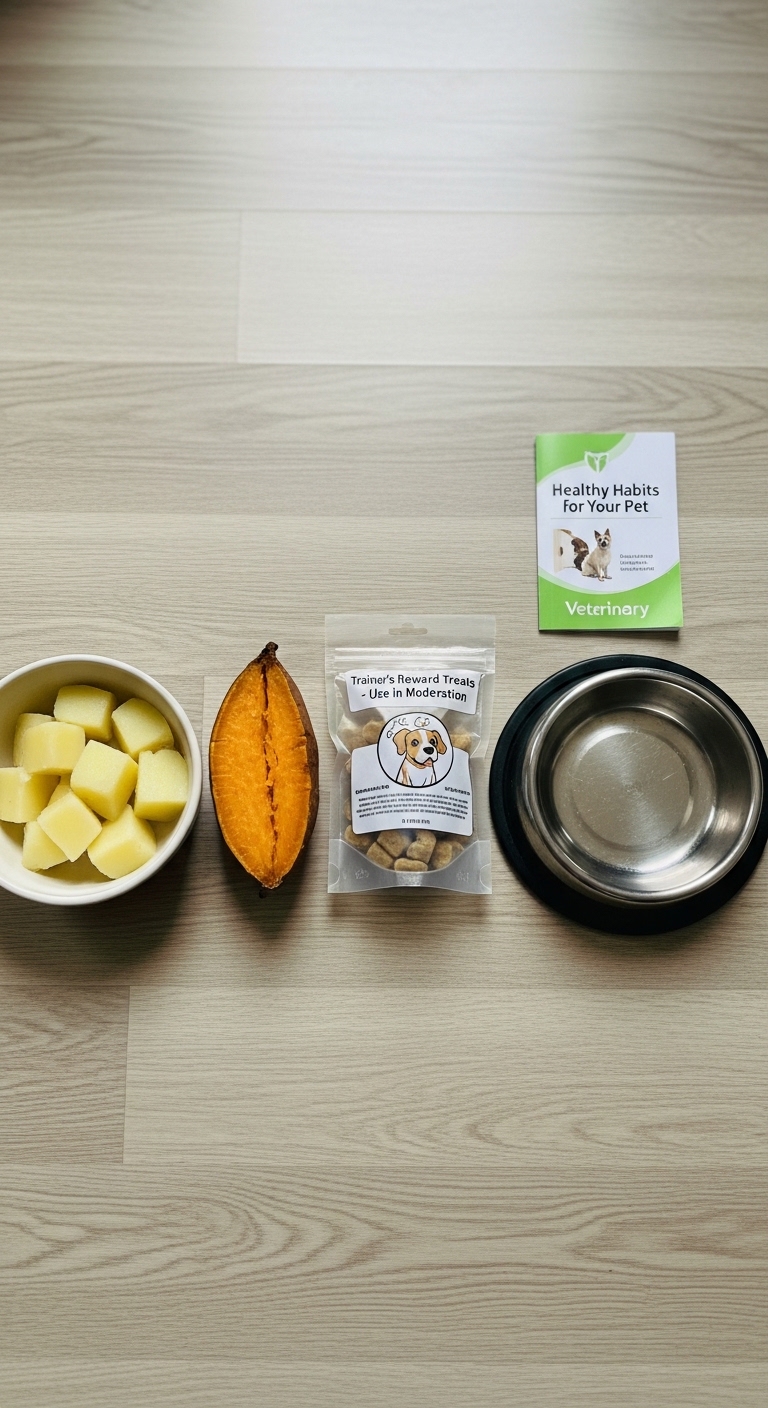
Many pet owners don’t realize that potato skins can be hard to digest and may cause blockages. I once saw a dog that had eaten a whole raw potato and ended up needing surgery it was a tough lesson. Always supervise your dog when introducing new foods and consult your vet if you’re unsure.
Potatoes in a Balanced Diet
Potatoes in moderation can be a good source of vitamins and fiber for dogs. They’re not a complete food, but they can add variety to a balanced diet.
Portion Control for Treats
If your dog is active and healthy, small amounts of plain potato can be a safe treat. Just remember, treats should make up no more than 10% of your dog’s daily calorie intake.
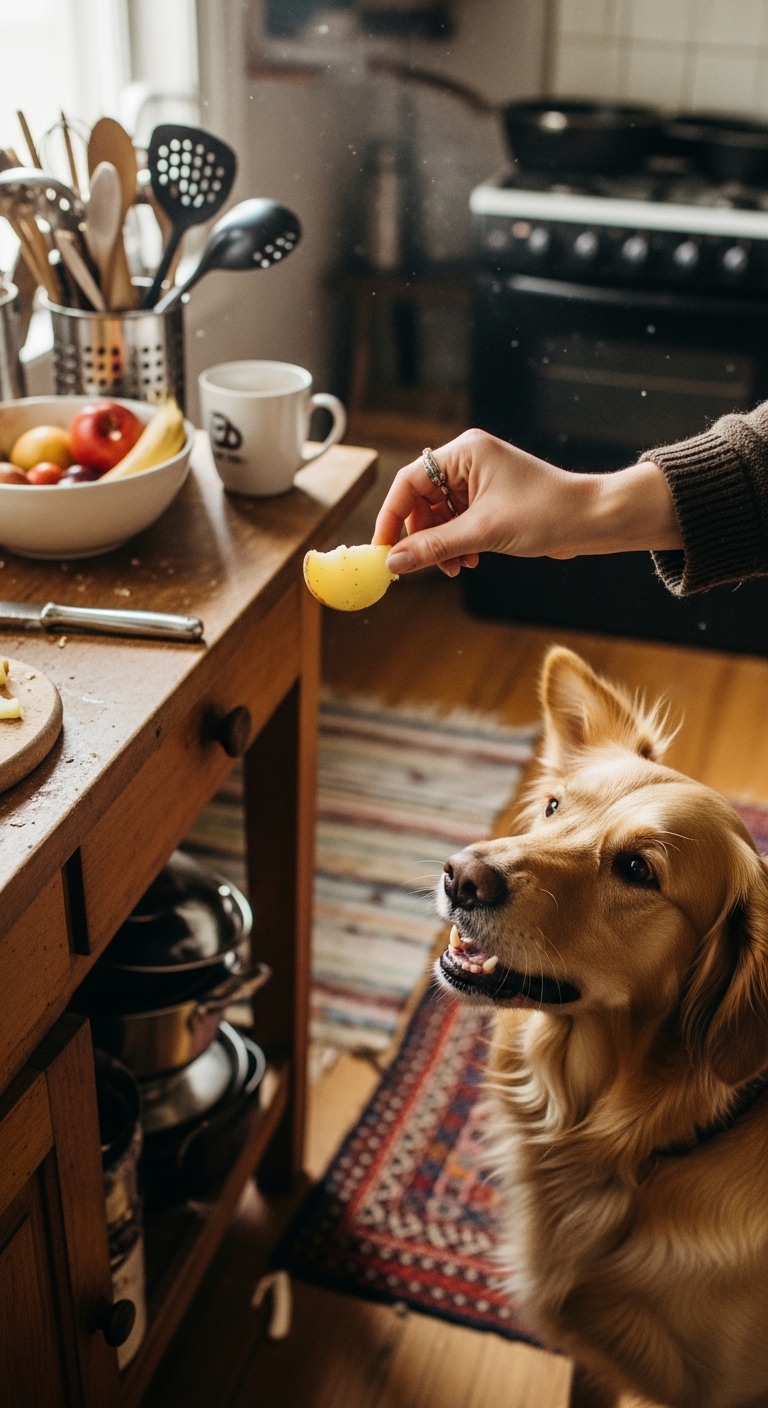
Potatoes can be a safe addition to your dog’s diet if prepared and served correctly. Always prioritize your pet’s health and consult a professional when in doubt.
Frequently Asked Questions
- → Can dogs eat raw potatoes?
No, dogs should not eat raw potatoes. Raw potatoes contain solanine, a toxic compound that can cause digestive upset, lethargy, or even poisoning. Always cook potatoes thoroughly before feeding them to your dog.
- → How much potato can I give my dog?
Potatoes should only make up about 10% of your dog's daily diet. For a medium-sized dog, a few small cubes (about 1-2 tablespoons) per serving is sufficient. Adjust portions based on your dog's size and activity level.
- → Are sweet potatoes better than regular potatoes for dogs?
Sweet potatoes are often considered a healthier option for dogs due to their higher fiber and vitamin A content. They are also less likely to cause blood sugar spikes compared to regular potatoes. However, both can be fed in moderation as part of a balanced diet.
- → Can dogs with diabetes eat potatoes?
Dogs with diabetes should avoid potatoes due to their high glycemic index, which can cause blood sugar spikes. Opt for low-carb vegetables like green beans or carrots instead. Always consult your vet before introducing new foods to a diabetic dog's diet.
- → What are the signs of potato poisoning in dogs?
Signs of potato poisoning in dogs include vomiting, diarrhea, lethargy, tremors, or difficulty breathing. If you suspect your dog has ingested raw or green potatoes, contact your vet immediately. Keep potatoes stored safely out of your dog's reach.
- → Can puppies eat potatoes?
Puppies can eat potatoes in small amounts, but it's best to introduce them gradually. Ensure the potatoes are cooked, plain, and cut into small, manageable pieces to prevent choking. Always consult your vet before adding new foods to a puppy's diet.