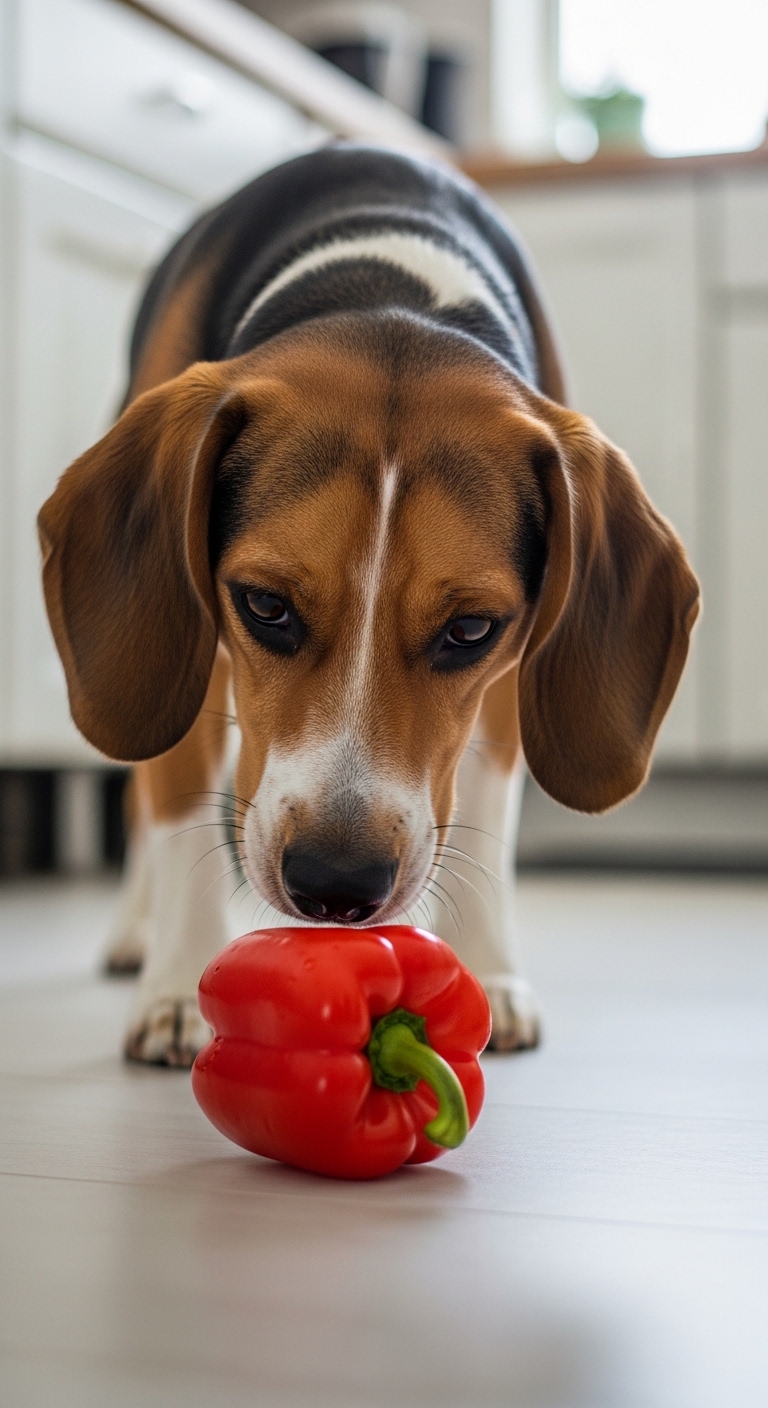
Can dogs eat peppers? It’s a question many pet owners ask, especially when preparing meals or looking for healthy snacks to share with their furry friends. Peppers are packed with vitamins and antioxidants, but not all types are safe for dogs. Knowing which ones are okay and in what amounts can help you make better choices for your pet’s diet without risking their health.
I remember when I first gave my dog a small piece of bell pepper as a treat. He loved the crunch, but I had to learn quickly that not all peppers are created equal and some could cause trouble.
Key Things to Understand
- Bell peppers: are generally safe for dogs in moderation since they’re low in calories and rich in vitamins A and C. Red, green, and yellow varieties are all fine, but always remove the seeds and stems first because they can be a choking hazard.
- Spicy peppers: like jalapeños or chili peppers should never be given to dogs. The capsaicin in these peppers can irritate their stomach lining and cause discomfort, vomiting, or diarrhea.
- Canned or pickled peppers: are a no-go because they often contain added salt, spices, or preservatives that can be harmful to dogs.
- Introduction: Even safe peppers should be introduced slowly and in small amounts to avoid digestive upset, especially for dogs with sensitive stomachs.
What to Look For
When choosing peppers for your dog, opt for fresh, organic options whenever possible to avoid pesticides or chemicals that could linger on the skin. Look for firm, bright-colored peppers without any soft spots or wrinkles, as these signs indicate freshness. If your dog has never eaten peppers before, start with a tiny piece about the size of a pea and watch for any signs of allergies or digestive issues over the next 24 hours. Pay attention to their reaction: excessive drooling, vomiting, or lethargy means it’s time to skip the peppers altogether.
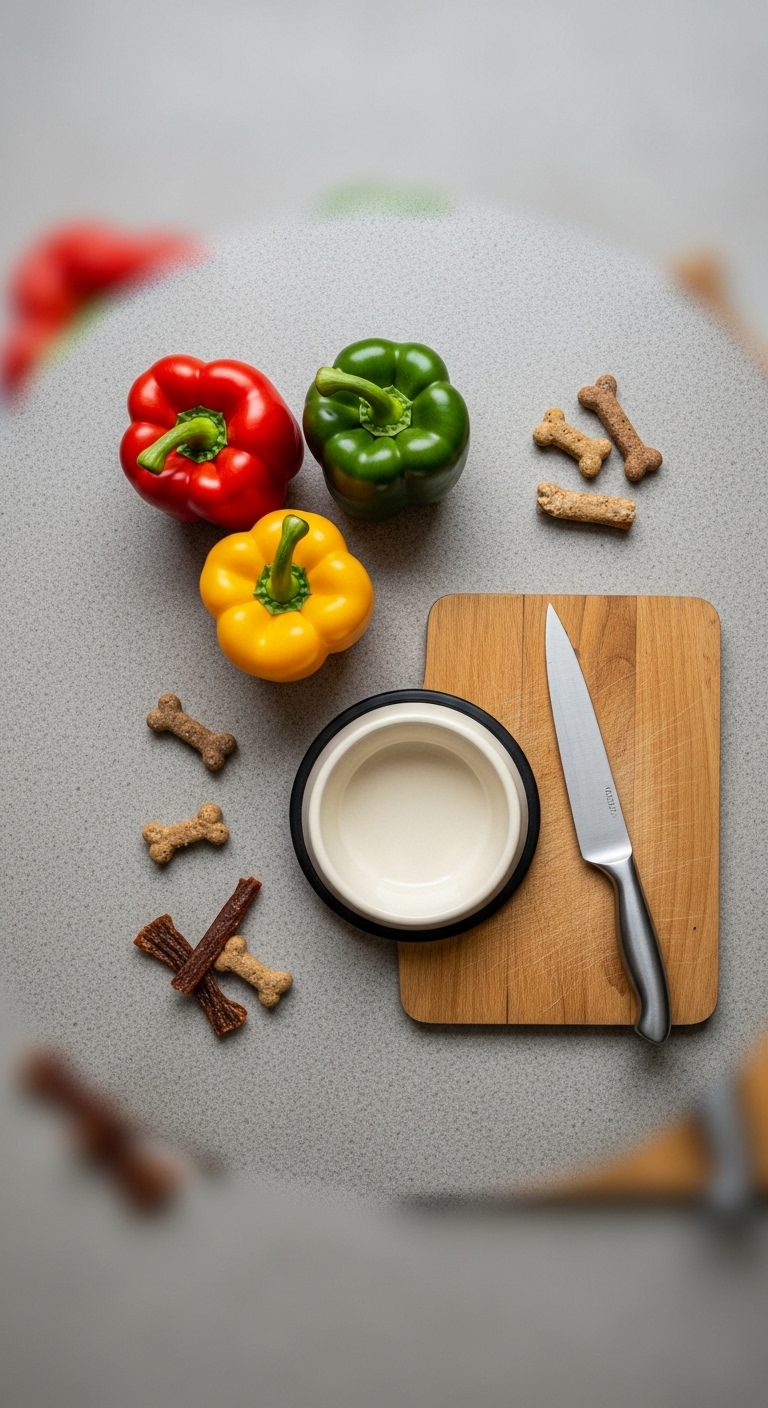
I once made the mistake of giving my neighbor’s dog a whole slice of bell pepper without removing the seeds. The poor pup ended up with a mild upset stomach, which taught me the hard way why preparation matters. Always take the time to prep peppers properly: it’s a small step that makes a big difference in keeping your dog happy and healthy.
Daily care habits
Incorporating safe vegetables like bell peppers into your dog’s diet can be a great way to add variety and nutrients to their meals. Try mixing small, finely chopped pieces into their regular food or using them as a low-calorie training treat. Keep portions tiny at first: think one or two small cubes per day, and gradually increase if your dog tolerates them well. If your dog is overweight or prone to digestive issues, consult your vet before adding new foods to their diet.
Choosing the right product
When shopping for peppers, skip the pre-cut or frozen varieties that might contain additives. Fresh, whole peppers are the best choice because you can control exactly what goes into your dog’s snack. If you’re unsure about organic options, give the pepper a thorough wash under running water to remove any pesticide residue. For dogs with food sensitivities, stick to one color at a time when introducing peppers to better track any potential reactions.
Safety and comfort
Even safe foods can become unsafe if not prepared correctly. Always remove the seeds, stems, and any tough outer skin before offering peppers to your dog, as these parts can pose a choking hazard or cause digestive blockages. If your dog has a history of pancreatitis or gastrointestinal issues, it’s best to avoid peppers altogether, as their high fiber content might trigger discomfort. Monitor your dog closely after their first few pepper snacks to ensure they’re not showing signs of discomfort or allergic reactions.
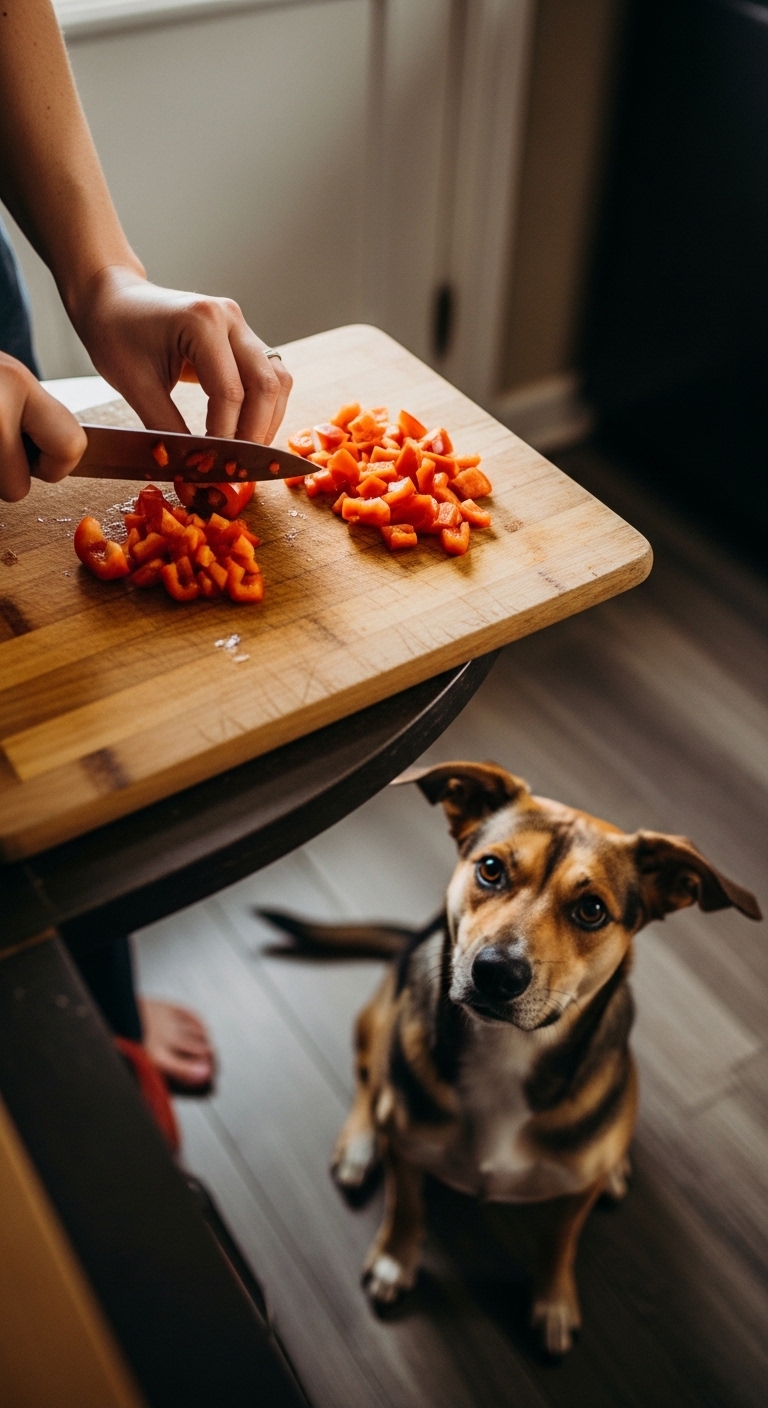
Keeping your dog safe and healthy is the top priority when introducing new foods. Always observe their reaction and adjust accordingly.
Frequently Asked Questions
- → Are all types of peppers safe for dogs?
No, not all peppers are safe for dogs. Bell peppers (red, yellow, green) are generally safe in moderation, while spicy varieties like jalapeños, chili peppers, or cayenne should be avoided as they can cause digestive upset or irritation.
- → How much pepper can I give my dog?
Start with small amounts, such as a few small pieces or slices, especially for smaller dogs. A good rule is to limit peppers to no more than 10% of your dog’s daily treat intake to avoid digestive issues.
- → Can dogs eat cooked peppers?
Yes, dogs can eat cooked peppers as long as they are prepared plain without oils, salt, or spices. Steaming or boiling is the best method to retain nutrients while making them easier to digest.
- → What are the benefits of feeding peppers to dogs?
Peppers are rich in vitamins A, C, and E, which support immune function, skin health, and overall wellness. They are also low in calories, making them a healthy, crunchy snack option for dogs.
- → Can puppies eat peppers?
Puppies can eat small amounts of plain, seedless bell peppers, but it's best to introduce them gradually and in tiny pieces to avoid choking hazards. Always consult your vet before adding new foods to a puppy’s diet.
- → Are pepper seeds toxic to dogs?
Pepper seeds are not toxic but can pose a choking hazard or cause digestive blockages, especially in smaller dogs. Always remove seeds and stems before offering peppers to your dog.
- → What should I do if my dog eats a spicy pepper?
If your dog accidentally eats a spicy pepper, monitor for signs of discomfort like vomiting, diarrhea, or excessive drooling. Offer plenty of water and contact your vet if symptoms persist or worsen.