Can dogs eat mandarin oranges? It’s a question many pet owners ask, especially when their pup eyes that juicy citrus snack. While the sweet, tangy taste might seem harmless, citrus fruits like mandarin oranges aren’t as simple as they look for our four-legged friends. The peel, seeds, and even the flesh contain compounds that can upset a dog’s stomach or, in larger amounts, cause more serious issues. But before you panic at the sight of your dog sneaking a bite, it’s worth understanding the risks and when a tiny piece might actually be okay.
Pet owners often share human foods with their dogs without realizing the hidden dangers. Mandarin oranges, like many fruits, can be tricky because they’re not all bad just in the right amounts and forms. Knowing the difference helps prevent accidental poisoning, vet visits, and unnecessary stress. Plus, it saves you from tossing out perfectly good fruit when a curious pup gets into it.
I’ve seen dogs get into mandarins at picnics and the aftermath isn’t pretty: vomiting, diarrhea, and a very sad pup. But with the right knowledge, you can keep snack time safe and still enjoy those shared moments.
Key Things to Understand
- Mandarins contain citric acid: which can irritate a dog’s stomach and lead to digestive upset. Even small amounts might cause vomiting or diarrhea, especially in sensitive dogs.
- The peel and seeds are the most dangerous parts: They’re hard to digest and can cause blockages or contain toxic compounds.
- The flesh in very small amounts is less risky but still not ideal: It’s high in sugar, which isn’t great for dogs in excess.
- Some dogs may have an allergic reaction to citrus: showing symptoms like itching, swelling, or difficulty breathing.
- Dogs with diabetes, obesity, or sensitive stomachs: should avoid mandarins entirely due to the sugar content.
What to Look For
Pay attention to how your dog reacts after eating any part of a mandarin orange. Signs of trouble include drooling, vomiting, diarrhea, lethargy, or loss of appetite within a few hours. If you notice these, it’s a clear signal to avoid citrus in the future. Also, watch for subtle changes like excessive scratching or pawing at the mouth, which could indicate an allergic response. For pet owners who love giving treats, it’s smart to check the ingredients in store-bought snacks too. Some dog treats or human foods might contain citrus extracts, which can add up over time and cause issues. Always read labels if you’re unsure.

I once had a client whose dog got into a whole bag of mandarins at a family gathering. The pup spent the night at the emergency vet getting fluids and monitoring for blockages. It was a costly lesson in portion control and supervision. Always keep snacks out of reach, especially when surrounded by guests who might not realize the risks.
Safe Alternatives to Mandarin Oranges
If you’re looking for a fruity treat your dog can enjoy, try small pieces of apple (without seeds), blueberries, or banana. These are lower in sugar and acidity, making them safer options. Always introduce new foods slowly and in tiny amounts to avoid upsetting your dog’s stomach.
How to Handle an Accidental Ingestion
If your dog sneaks a mandarin orange, don’t panic. Remove any remaining fruit, peel, or seeds from their reach. Monitor them closely for the next few hours. If they show signs of vomiting, diarrhea, or lethargy, call your vet. Keep a close eye on their behavior: sometimes symptoms take a little while to appear.
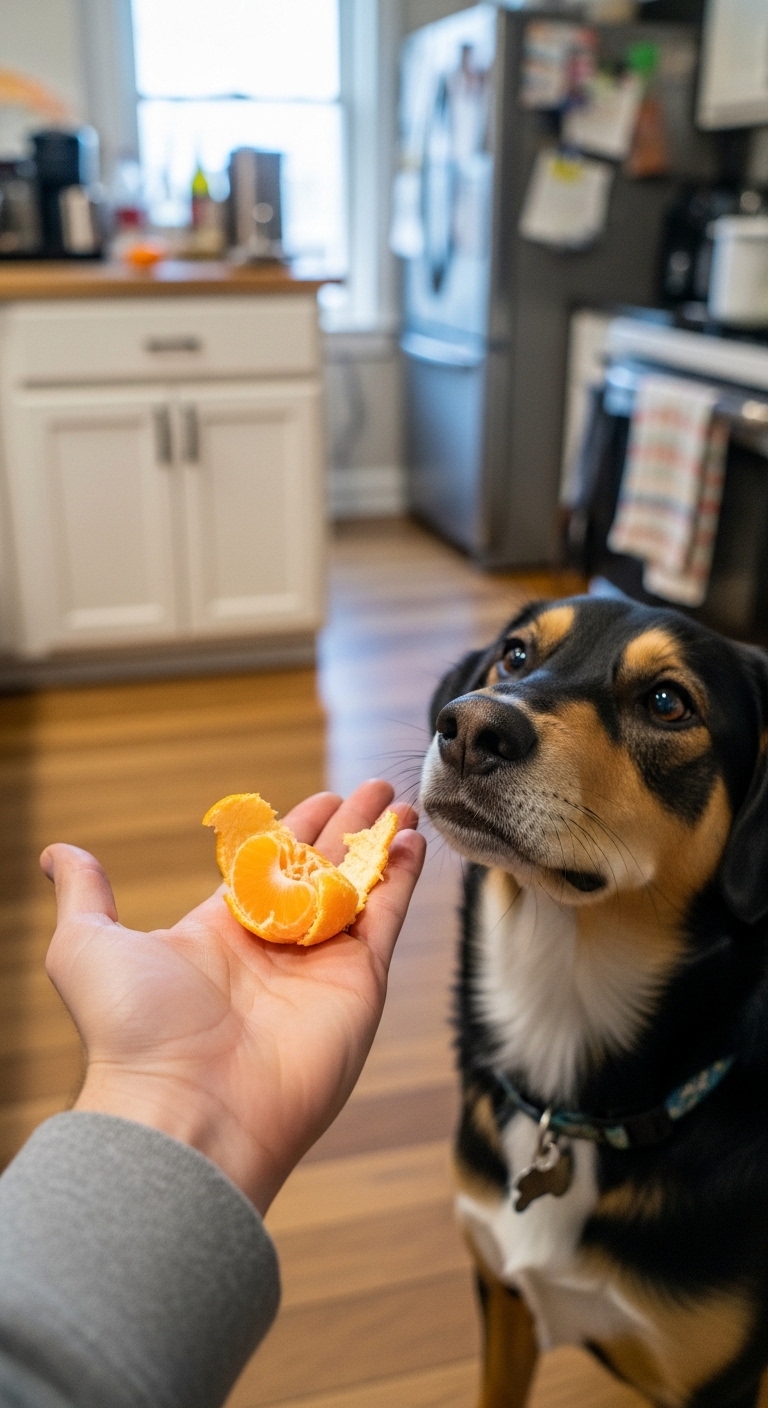
With the right knowledge, you can keep snack time safe and enjoyable for your pup.
Frequently Asked Questions
- → Are mandarin oranges toxic to dogs?
No, mandarin oranges are not toxic to dogs, but they should be given in strict moderation. The flesh is safe in small amounts, but the seeds, peels, and high sugar content can cause issues like digestive upset or allergic reactions.
- → How much mandarin orange can I give my dog?
Start with just one or two small segments as a treat. Monitor your dog for 24 hours for signs of discomfort, vomiting, or diarrhea. Larger dogs may tolerate slightly more, but always prioritize small portions to avoid sugar overload.
- → Can puppies eat mandarin oranges?
Puppies have sensitive digestive systems, so it’s best to avoid mandarin oranges entirely. Their tiny bodies may struggle with the citric acid and sugars, leading to stomachaches or more serious reactions. Stick to puppy-safe treats instead.
- → What are the risks of feeding mandarins to dogs?
Risks include choking hazards from seeds or peels, digestive issues like vomiting or diarrhea, allergic reactions (itchy skin, hives), and blood sugar spikes due to natural sugars. Dogs with diabetes or obesity should avoid this fruit entirely.
- → How should I prepare mandarins for my dog?
Peel the mandarin completely, remove all seeds, and separate it into small, bite-sized segments. Avoid canned or processed mandarins, as they often contain added sugars or preservatives that are harmful to pets. Serve fresh and plain.
- → What should I do if my dog eats too many mandarins?
Contact your vet immediately if your dog consumes a large amount. Watch for symptoms like lethargy, vomiting, diarrhea, or loss of appetite. Bring a sample of the fruit or packaging to help the vet assess the situation quickly.