Can dogs eat hot dogs? It’s a question many pet owners ask, especially when those big puppy eyes are staring up at you while you’re grilling or unpacking groceries. Hot dogs seem like a harmless treat, but there’s more to consider than just the tempting smell. Knowing what’s safe for your dog can prevent unnecessary vet visits and keep your pup happy and healthy.
I remember the first time my rescue pup, Max, got a tiny piece of hot dog. His tail wagged like crazy, but within minutes he started scratching more than usual. A quick call to the vet confirmed it was a mild reaction to the seasoning. That moment taught me how easy it is to overlook hidden ingredients in human food.
Key Things to Understand
- Sodium levels: Hot dogs often contain high levels of sodium which can lead to dehydration or even salt poisoning in dogs
- Toxic ingredients: Many brands include garlic and onion powder which are toxic to dogs and can cause serious health issues
- Choking hazard: The casing on some hot dogs can be a choking hazard especially for small or eager eaters
- High fat content: The fat content in hot dogs is much higher than what dogs typically need which can upset their stomach or contribute to obesity
- Portion control: Even plain cooked hot dogs without seasoning should only be given in very small amounts as an occasional treat
What to Look For
Pay attention to how your dog reacts after eating a hot dog. Signs of trouble can include excessive thirst, vomiting, diarrhea, or lethargy within a few hours. If you notice any of these, contact your vet right away. Also watch for subtle changes like increased scratching or restlessness which might indicate an allergy or sensitivity. Check the ingredient list on the hot dog package before sharing. Avoid brands with garlic, onion, or excessive spices. If the label lists “natural flavors” without details, it’s safer to skip it. Stick to plain, unseasoned meats when possible.

A common mistake is assuming all hot dogs are the same. Some “all beef” or “organic” versions still contain harmful additives. Another oversight is giving hot dogs as a daily treat without adjusting their regular food portions. Remember, treats should make up no more than 10 percent of your dog’s daily calorie intake. I once met a dog owner who fed hot dogs daily thinking it was a good protein source. After switching to a balanced diet, their dog’s energy and coat improved dramatically.
Daily care habits
Instead of hot dogs, try offering small pieces of plain cooked chicken or turkey as a safer alternative. These lean proteins are easier on your dog’s stomach and provide quality nutrition without the risks. Keep these treats in the fridge so they’re ready for quick rewards during training or walks.
Choosing the right product
If you still want to share hot dogs occasionally, look for low sodium, no garlic or onion, and minimal additives. Natural or organic brands often have cleaner ingredient lists. Always check the label for xylitol, an artificial sweetener that is extremely toxic to dogs even in small amounts.
Safety and comfort
Never feed your dog hot dogs straight from the package or while cooking on the grill. The heat and smoke can cause burns or respiratory irritation. Cut hot dogs into tiny, bite sized pieces to prevent choking, especially for small breeds. If your dog is prone to gulping food, flatten the pieces slightly to slow them down.
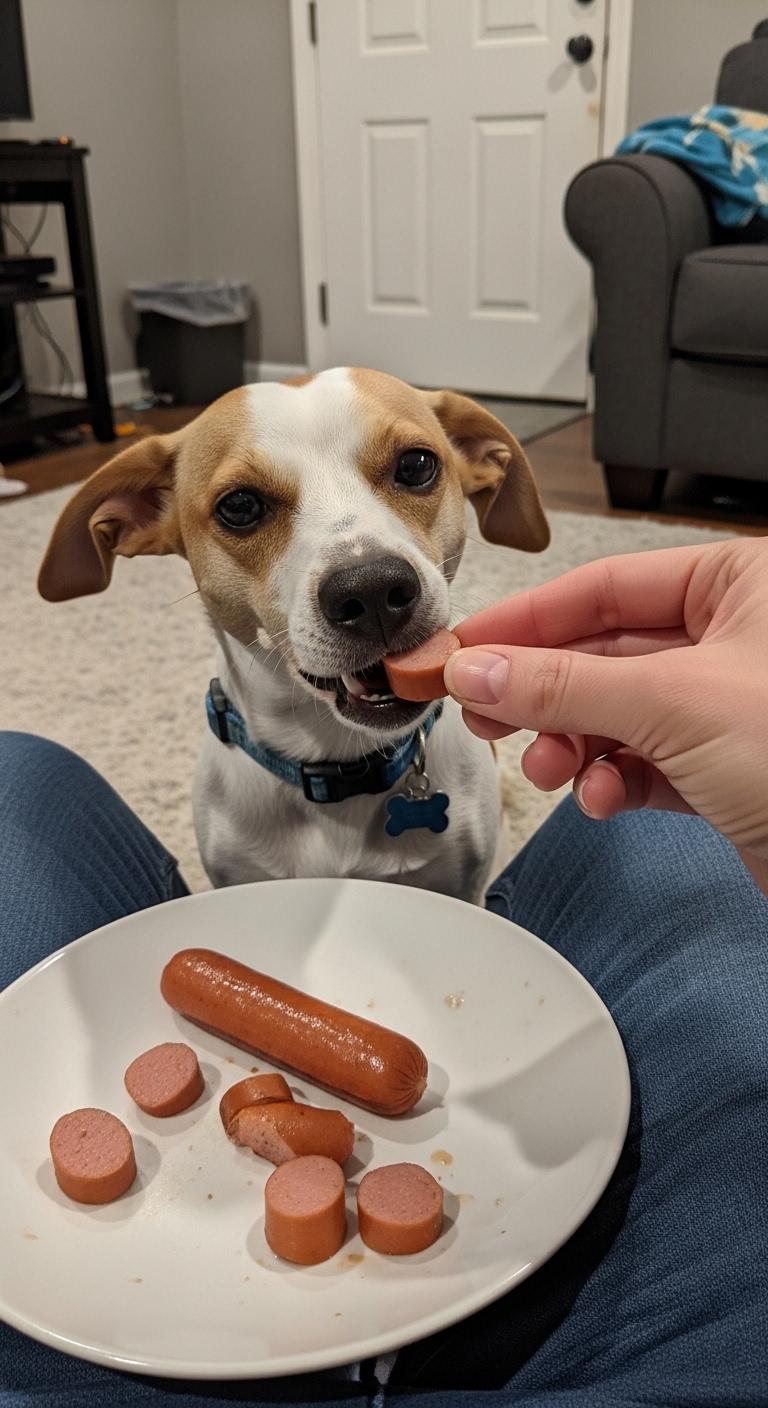
Even if your dog begs with those irresistible eyes, it’s okay to say no to hot dogs. There are plenty of safer, healthier ways to show love through treats.
Frequently Asked Questions
- → Can dogs eat hot dogs safely?
Dogs can eat hot dogs in very small amounts occasionally, but they are not recommended as a regular treat. Hot dogs contain high sodium and fat levels, which can cause health issues over time.
- → What are the risks of feeding hot dogs to dogs?
Risks include sodium ion poisoning, obesity, pancreatitis, and digestive upset due to high fat and preservatives. Additives like garlic or onion are also toxic.
- → How much hot dog can I give my dog?
If given at all, limit to a small piece (less than 10% of daily caloric intake) and ensure it is plain, unseasoned, and without casing.
- → What should I do if my dog eats a hot dog?
Monitor for symptoms like vomiting or lethargy. If your dog shows signs of distress or has pre-existing conditions, contact your vet immediately.
- → Are there healthier alternatives to hot dogs for dogs?
Yes, boiled chicken, turkey, or commercial dog treats are better options. Always introduce new foods gradually and in moderation.
- → Can puppies eat hot dogs?
Puppies should avoid hot dogs due to their high sodium and fat content. Stick to puppy-specific treats for their dietary needs.