Plums can be a tasty treat for dogs in moderation, but they come with important caveats. The flesh is generally safe and packed with vitamins A and C, fiber, and antioxidants, which support your dog’s immune system and digestion.
However, the pit, leaves, and stem contain amygdalin, which converts to cyanide—a dangerous toxin. Always remove the pit and any seeds before offering plums to your pet. Small pieces of the fruit are fine, but too much can cause stomach upset due to the high sugar content.
Introduce plums slowly into your dog’s diet to monitor for adverse reactions like vomiting or diarrhea. If your dog has diabetes or weight issues, consult your vet before sharing this fruit. For a safer alternative, consider seedless varieties or small amounts of plum puree without pits.
Plums are a juicy summer treat many of us enjoy, but when your dog gives you those hopeful eyes under the table, it’s natural to wonder if they can share. The answer isn’t a simple yes or no, and knowing the details can prevent a risky situation or even a trip to the vet.
Understanding which parts of a plum are safe or dangerous helps you make quick, smart decisions. Learning the signs of plum poisoning can save your dog from serious health issues. Knowing safe alternatives keeps your dog happy without the risk.
I’ve seen dogs go crazy for the smell of fresh fruit, but plums are one of those foods where a little knowledge goes a long way in keeping them safe.
The flesh of a ripe plum is generally safe in very small amounts but offers little nutritional benefit to dogs. The pit, stem, and leaves contain amygdalin, which turns into cyanide when metabolized and can be toxic. Even a small amount of pit can cause intestinal blockages, especially in smaller breeds.
Symptoms of plum poisoning include vomiting, diarrhea, lethargy, and difficulty breathing. Dogs with existing health conditions or sensitive stomachs are at higher risk.
The first thing to check is whether your dog has actually eaten the pit. If they’ve only had a tiny bit of flesh, monitor them for any unusual behavior. Watch for signs like excessive drooling, pawing at the mouth, or changes in appetite, which could indicate discomfort or poisoning.
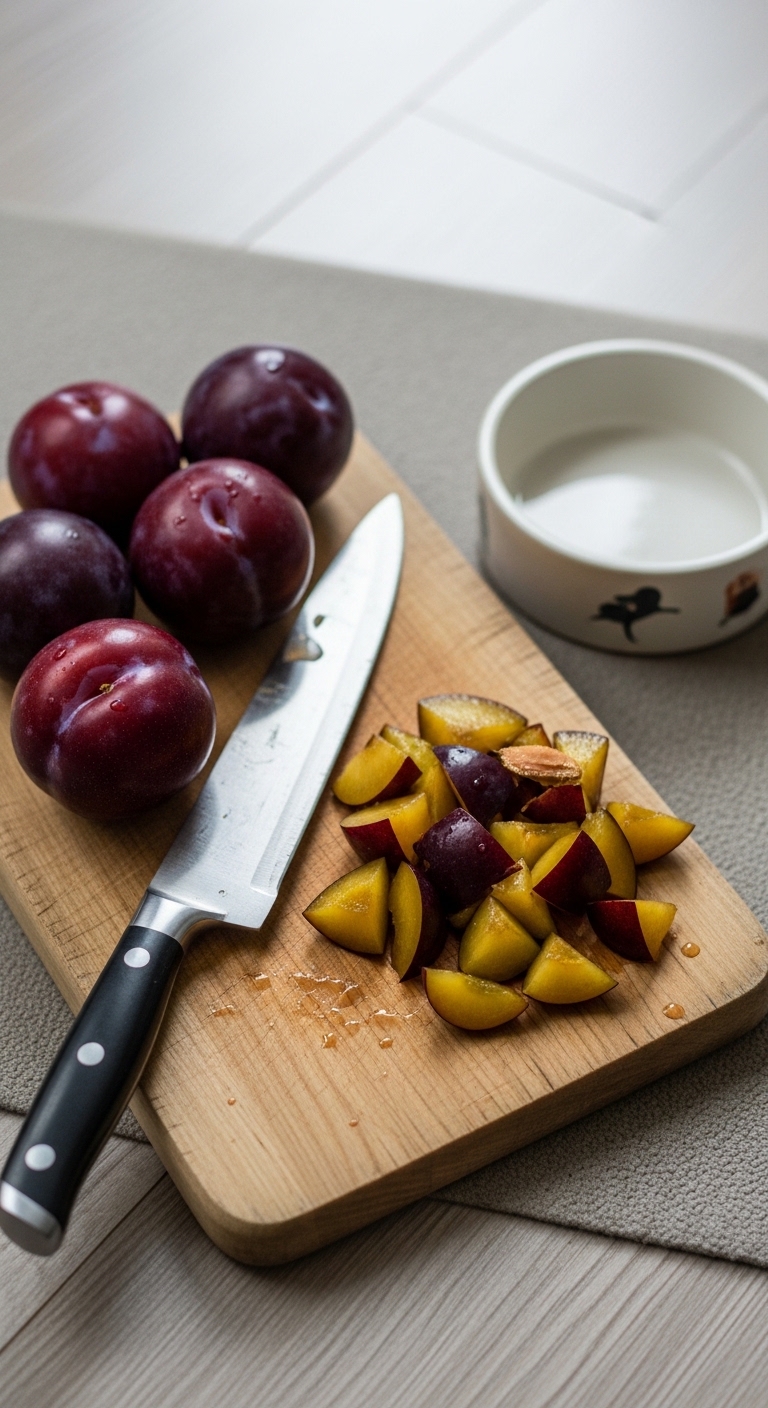
A knife and a bowl of plums on a cutting board. | petcarepicked.com
Pay attention to their stool as well—any blood or unusual consistency is a red flag. If you suspect they’ve swallowed a pit, look for choking, gagging, or signs of pain, which could mean an obstruction.
The pit is the most dangerous part of a plum for dogs. Even one pit can cause cyanide poisoning or a life-threatening blockage. Small dogs are at greater risk due to their size. If you suspect poisoning, contact your vet or an emergency pet poison hotline immediately.
It’s easy to assume that because plums are natural, they’re safe, but that’s a common mistake. Many pet owners don’t realize how quickly a dog can swallow a pit without chewing, which makes this fruit particularly risky.
If your dog loves fruit, there are much safer options. Small pieces of apple without seeds, blueberries, or watermelon (without rind or seeds) are great choices. These fruits are low in calories and packed with vitamins, making them a healthier treat. Always introduce new foods in small amounts to check for any adverse reactions.
Sometimes, dogs are sneaky and grab food when you’re not looking. If you find a half-eaten plum or notice your dog acting strangely, check their mouth for any remaining pit fragments. Look for signs like restlessness, pacing, or whining, which can indicate discomfort. In severe cases, you might see tremors or collapse, which require immediate veterinary attention.
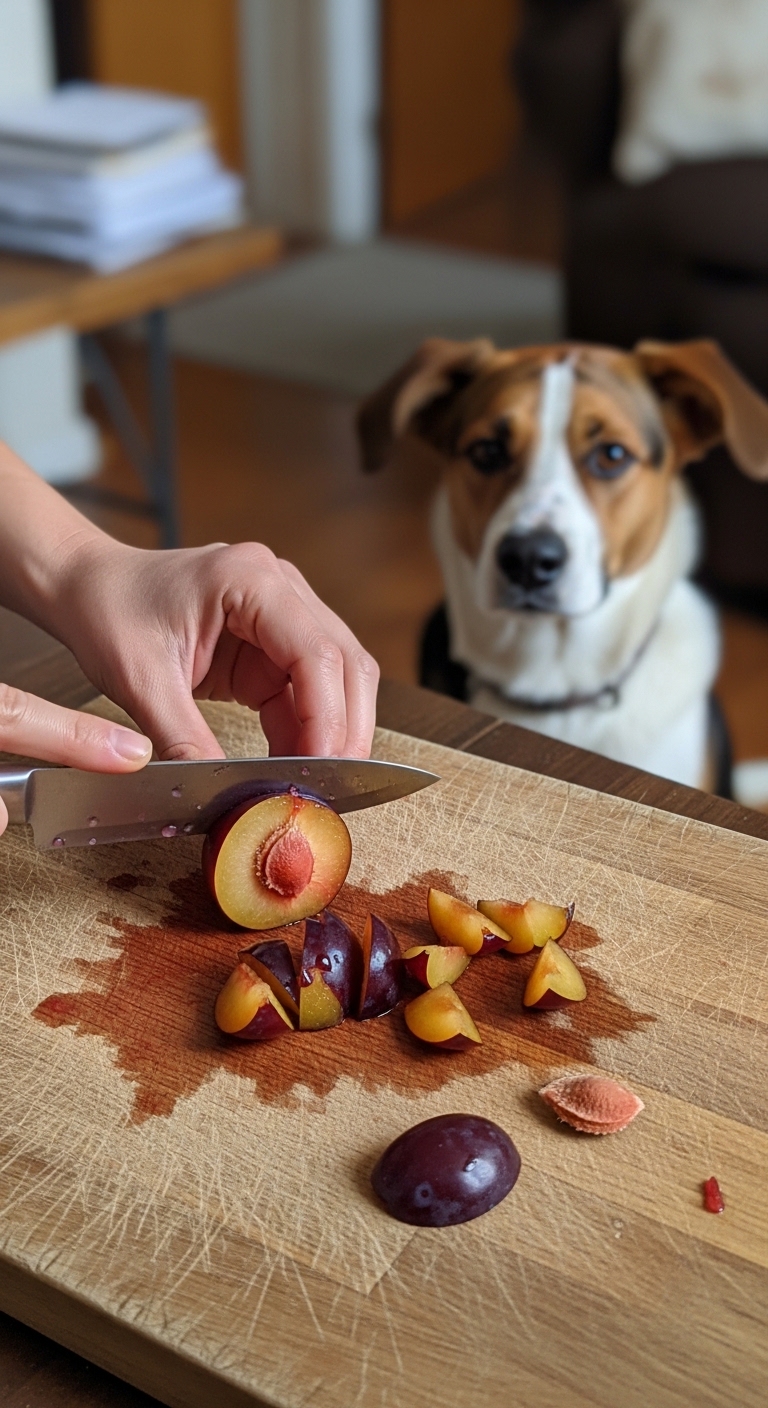
A person is cutting a peach on a cutting board while a dog looks on. | petcarepicked.com
The best way to keep your dog safe is to prevent access to plums altogether. Keep fruit bowls out of reach, and be mindful of where you discard pits. If you have a plum tree in your yard, clean up fallen fruit regularly to avoid temptation.
Training your dog to leave certain foods alone can also be helpful, but supervision is key. Always remove pits, stems, and leaves before offering any fruit to your dog. When in doubt, stick to dog-safe fruits like bananas or strawberries.
If your dog eats a plum pit, call your vet right away—don’t wait for symptoms to appear. Quick action can make all the difference in preventing serious health complications.
Frequently Asked Questions
→ Are plums toxic to dogs?
Plums themselves aren’t toxic, but their pits, leaves, and stems contain cyanide-producing compounds. Always remove these parts before feeding your dog plum flesh.
→ How much plum can a dog eat?
Small dogs should have no more than 1-2 small pieces of plum flesh per week, while larger dogs can safely enjoy 2-3 pieces. Monitor for digestive upset.
→ Can puppies eat plums?
Puppies have sensitive stomachs, so it’s best to avoid plums until they’re older. If introduced, offer tiny amounts of flesh only and watch for reactions.
→ What are the benefits of plums for dogs?
Plums provide fiber for digestion, vitamins A and C for immunity, and antioxidants for overall health. The flesh is low-calorie and hydrating.
→ What should I do if my dog eats a plum pit?
Contact your vet immediately. Pit ingestion can cause choking, intestinal blockage, or cyanide poisoning. Watch for symptoms like vomiting, lethargy, or difficulty breathing.
→ Are dried plums (prunes) safe for dogs?
Prunes are more concentrated in sugar and fiber, which can cause digestive issues. Offer only small amounts occasionally and avoid prune pits and stems.
→ Can dogs with diabetes eat plums?
Plums contain natural sugars, so dogs with diabetes should only have them in very small amounts and under veterinary guidance to avoid blood sugar spikes.
Stay Updated
Get the latest articles delivered straight to your inbox. No spam, just great inspiration!

 Pin
Pin